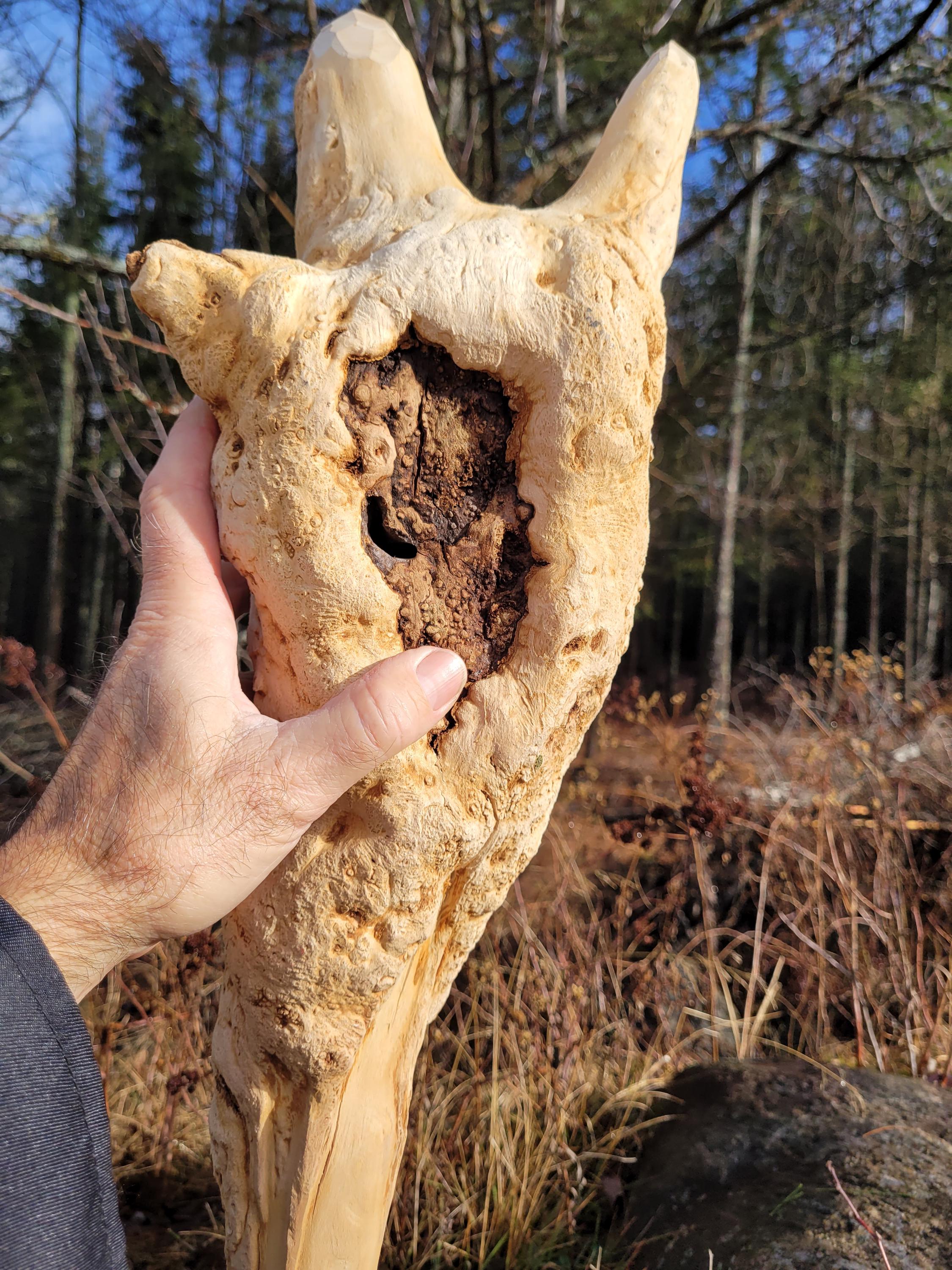
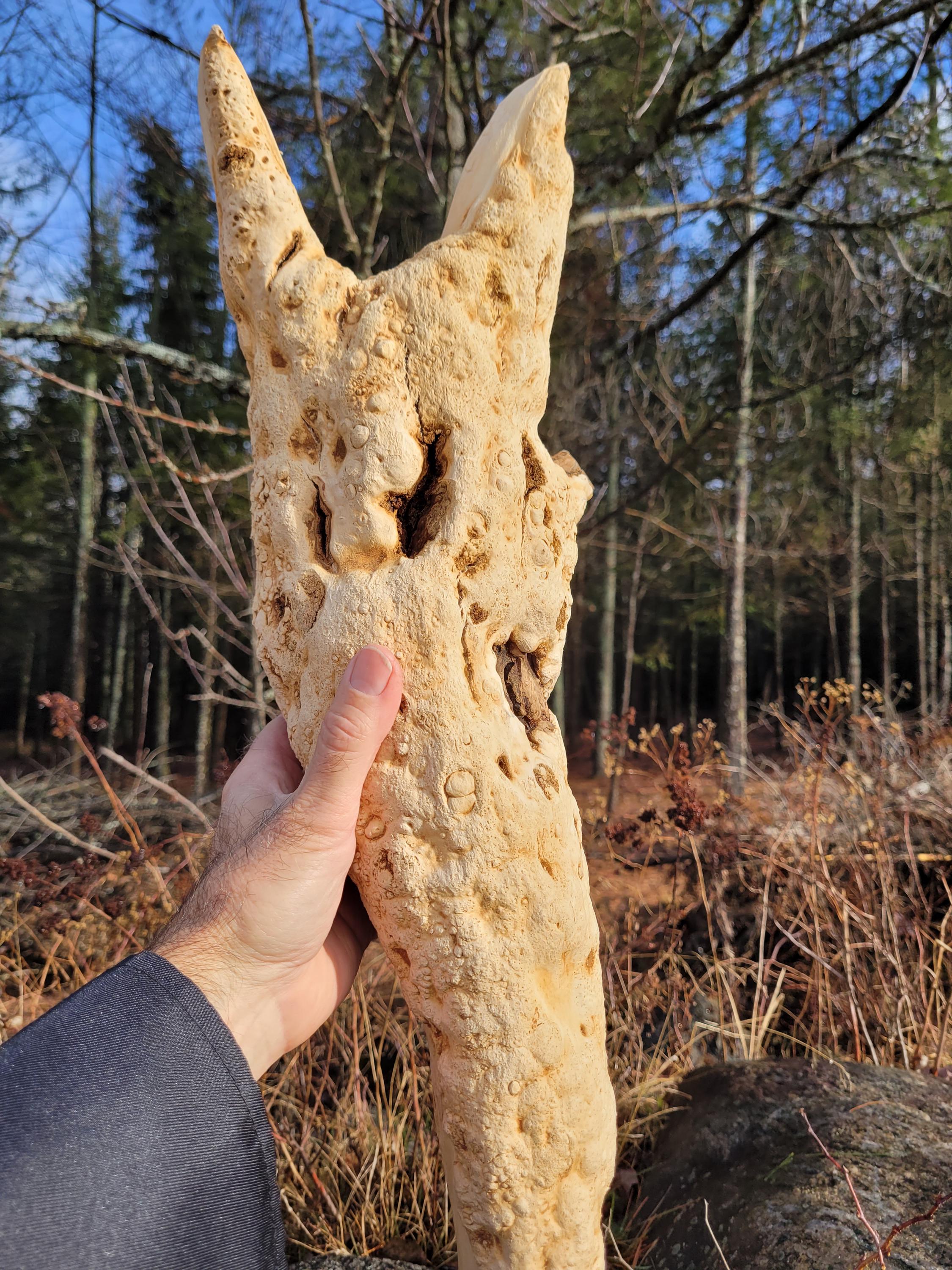
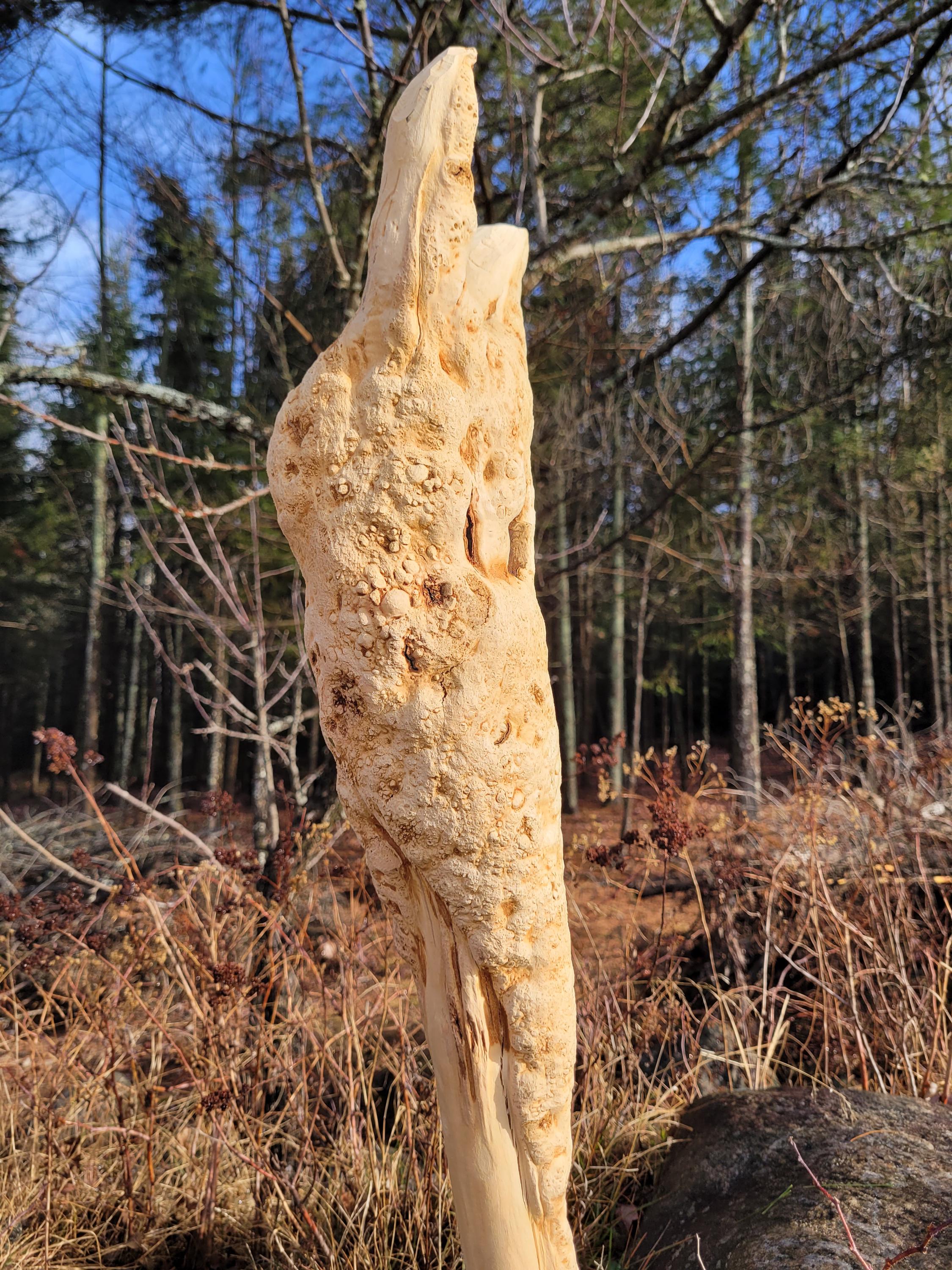
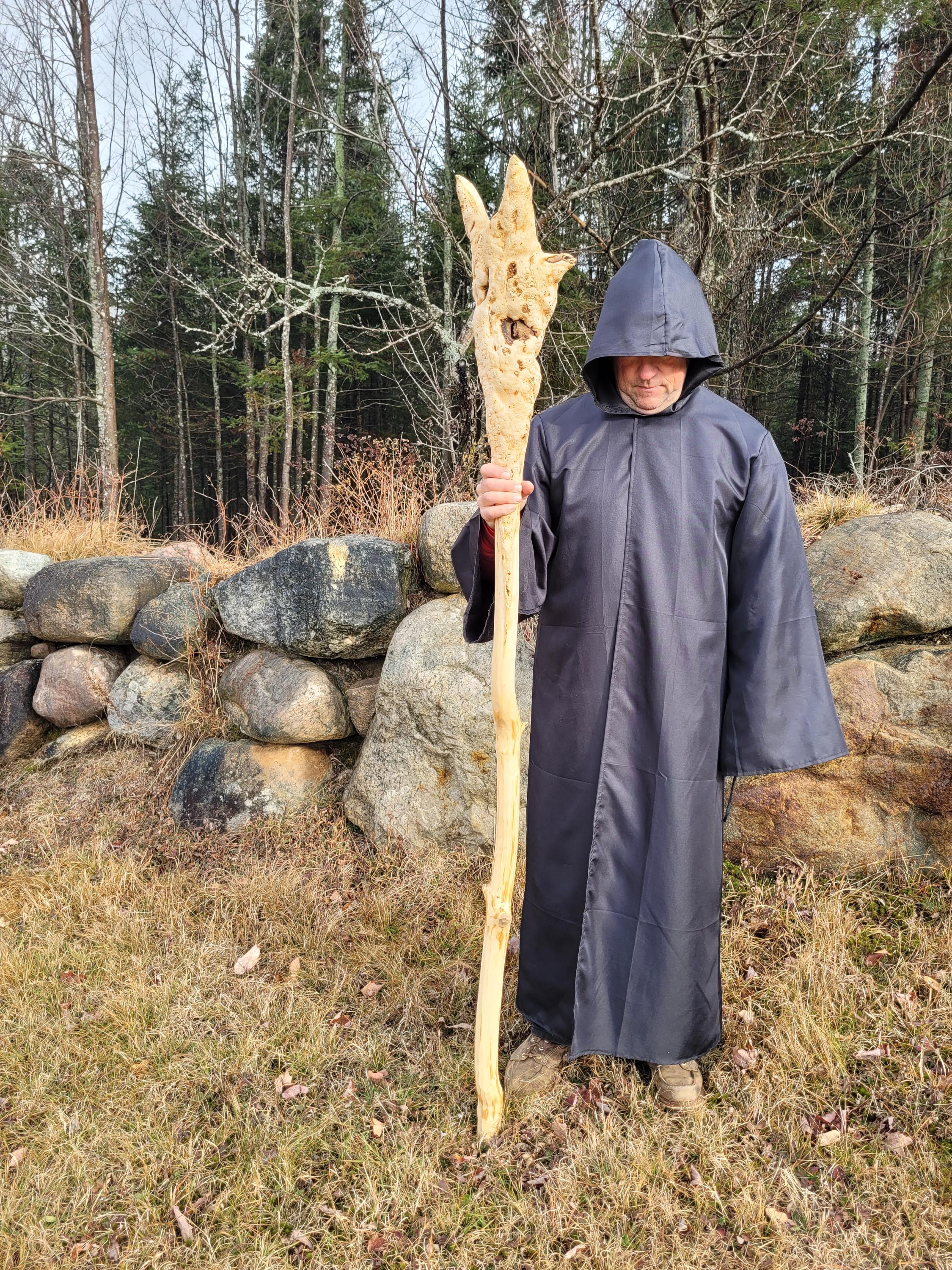
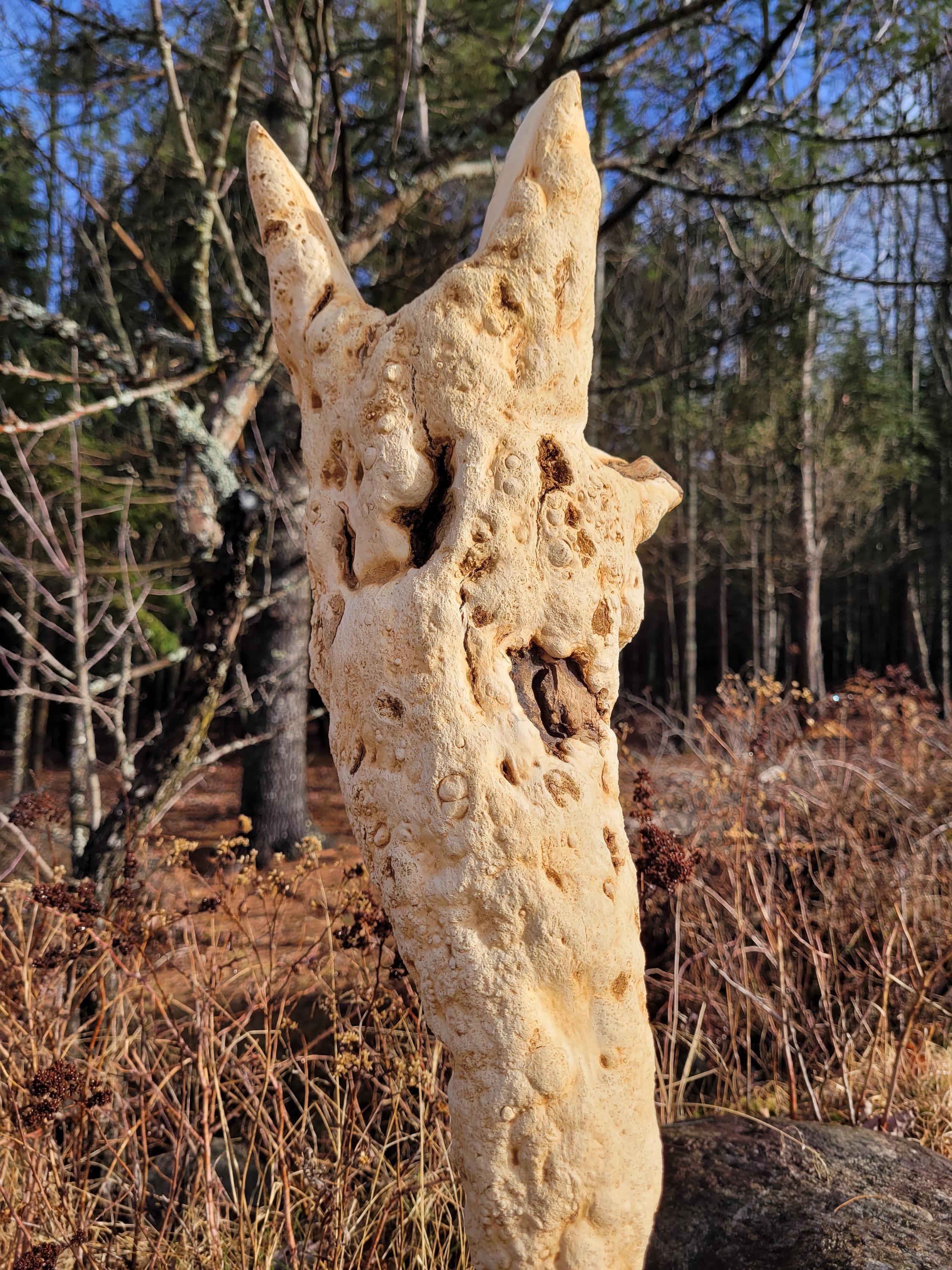
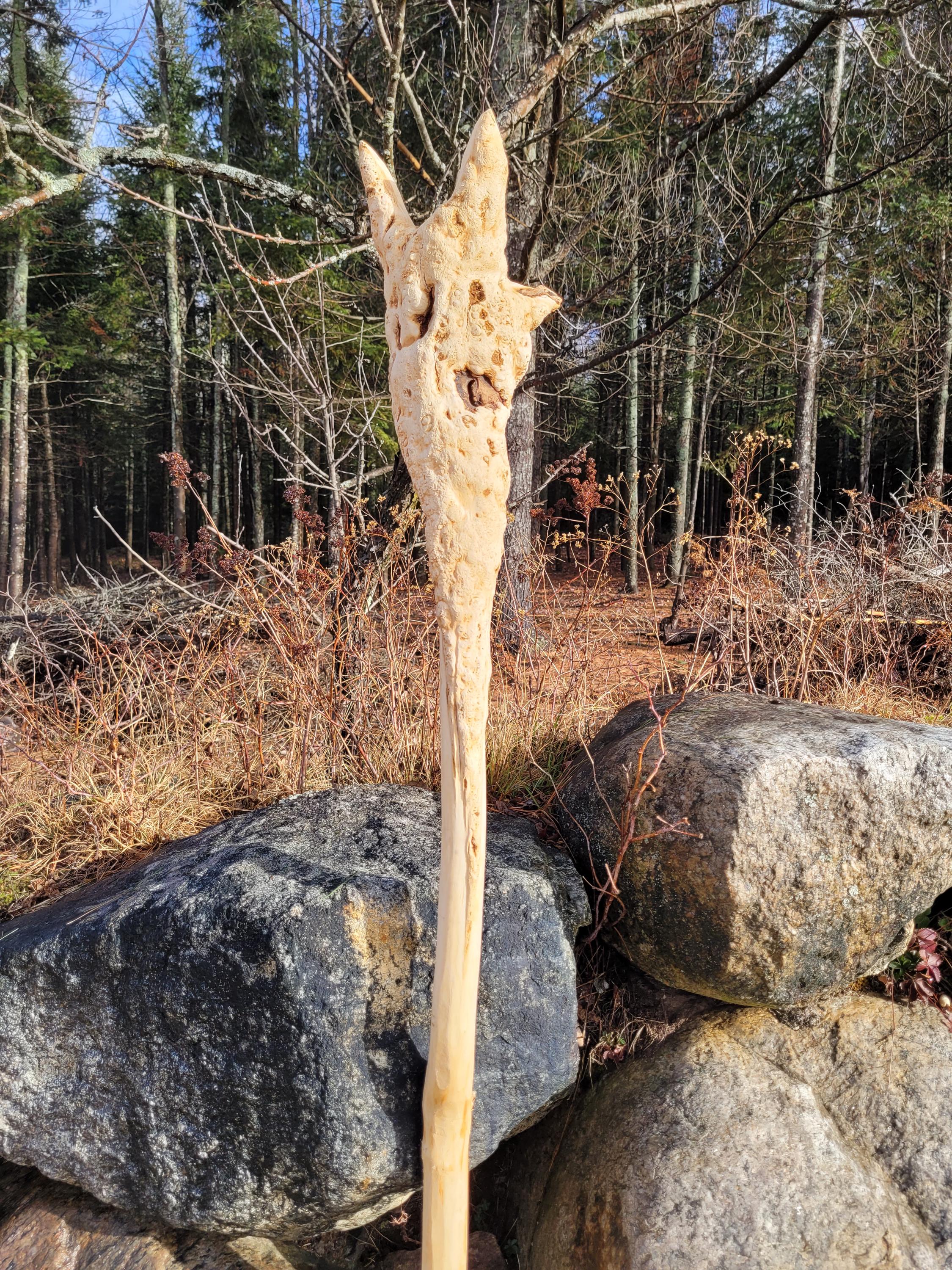
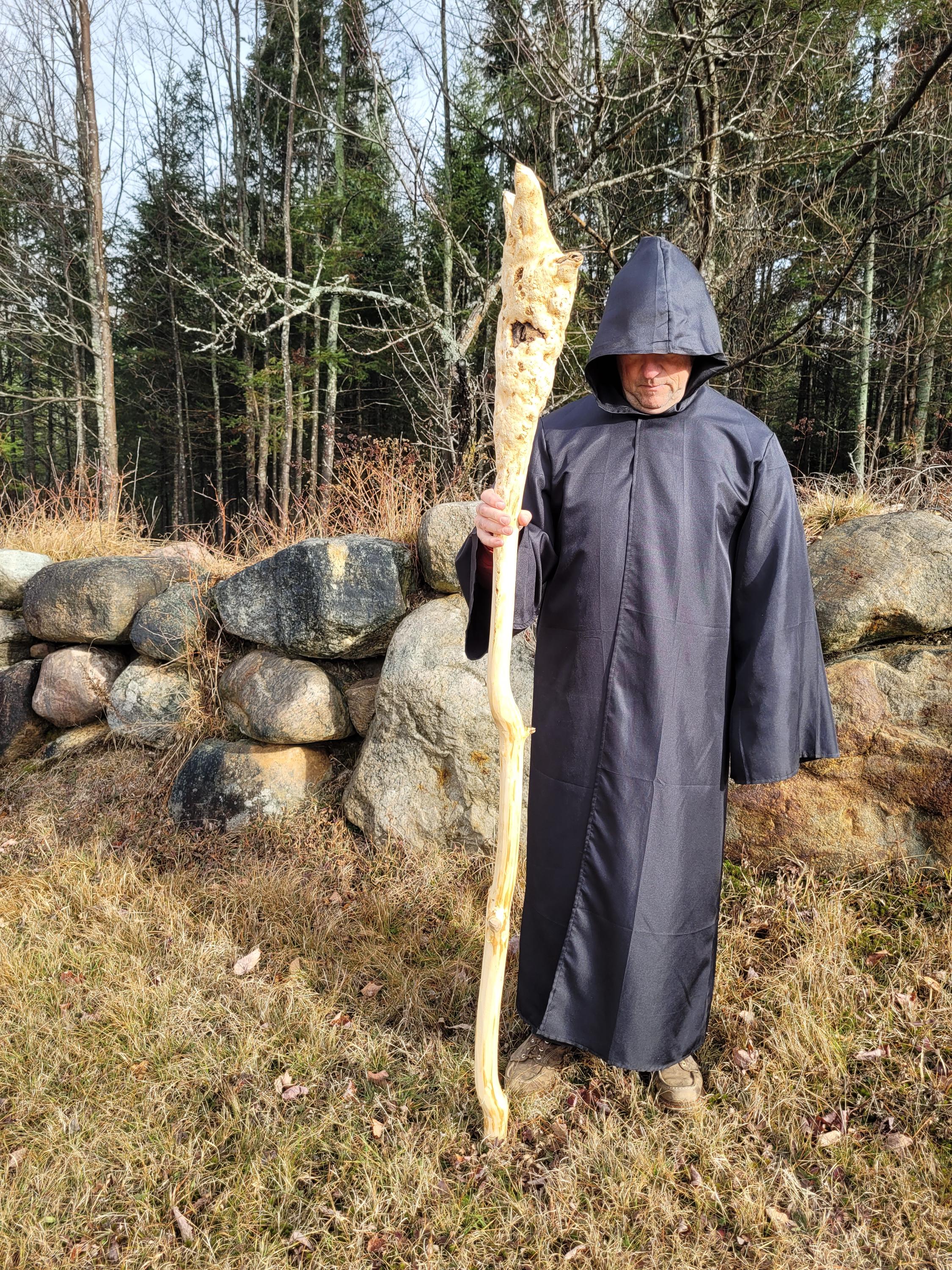
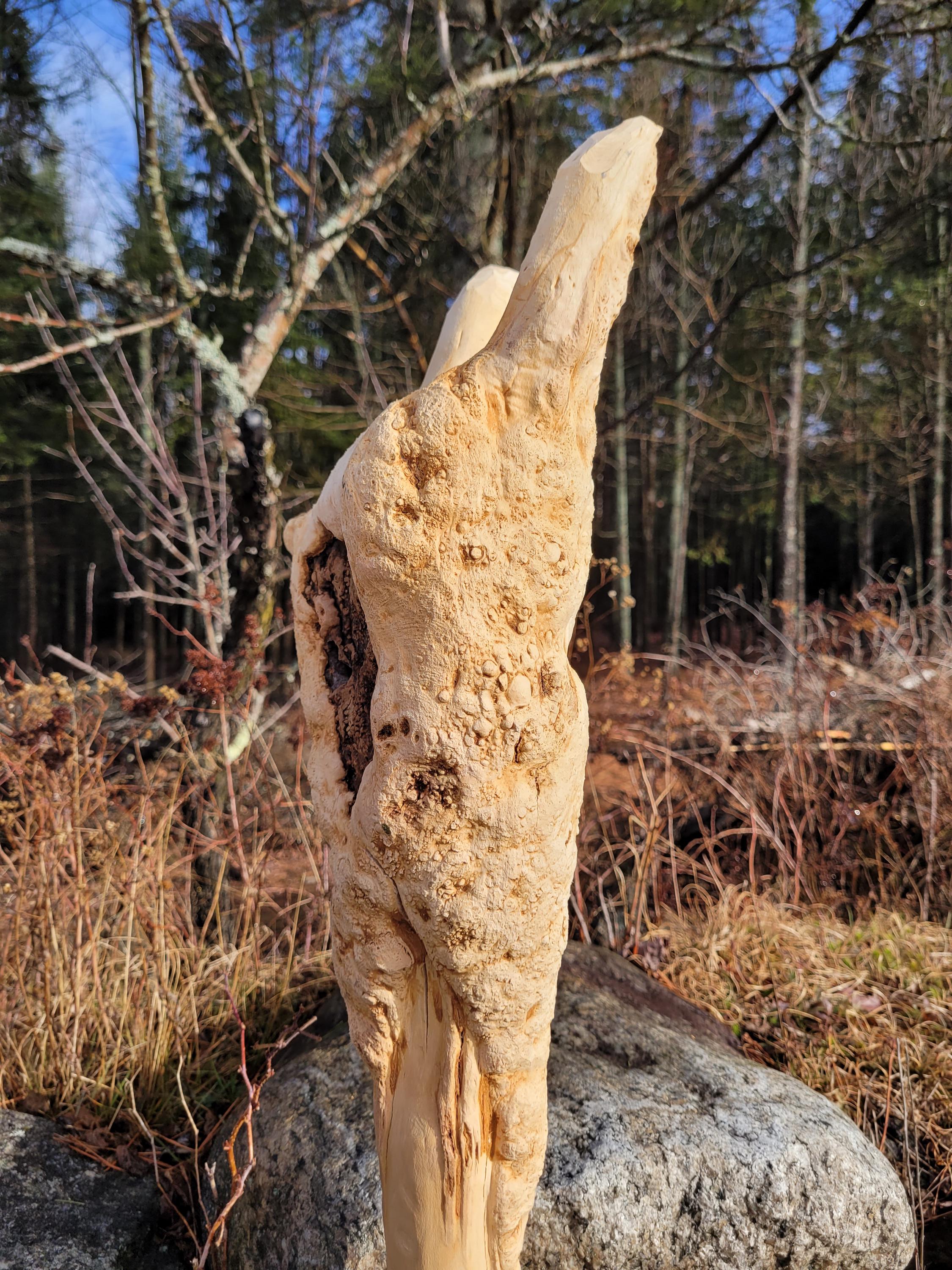
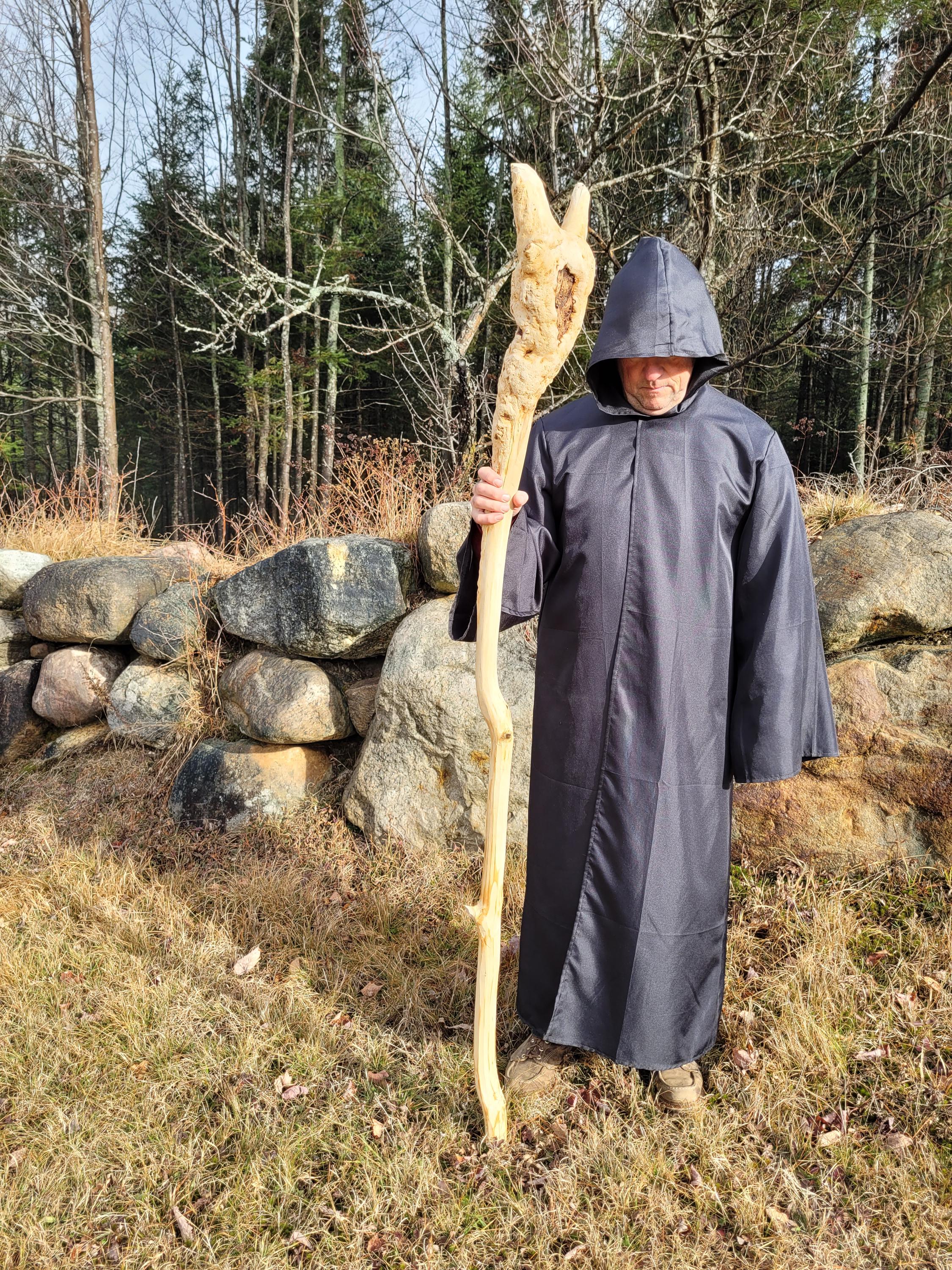
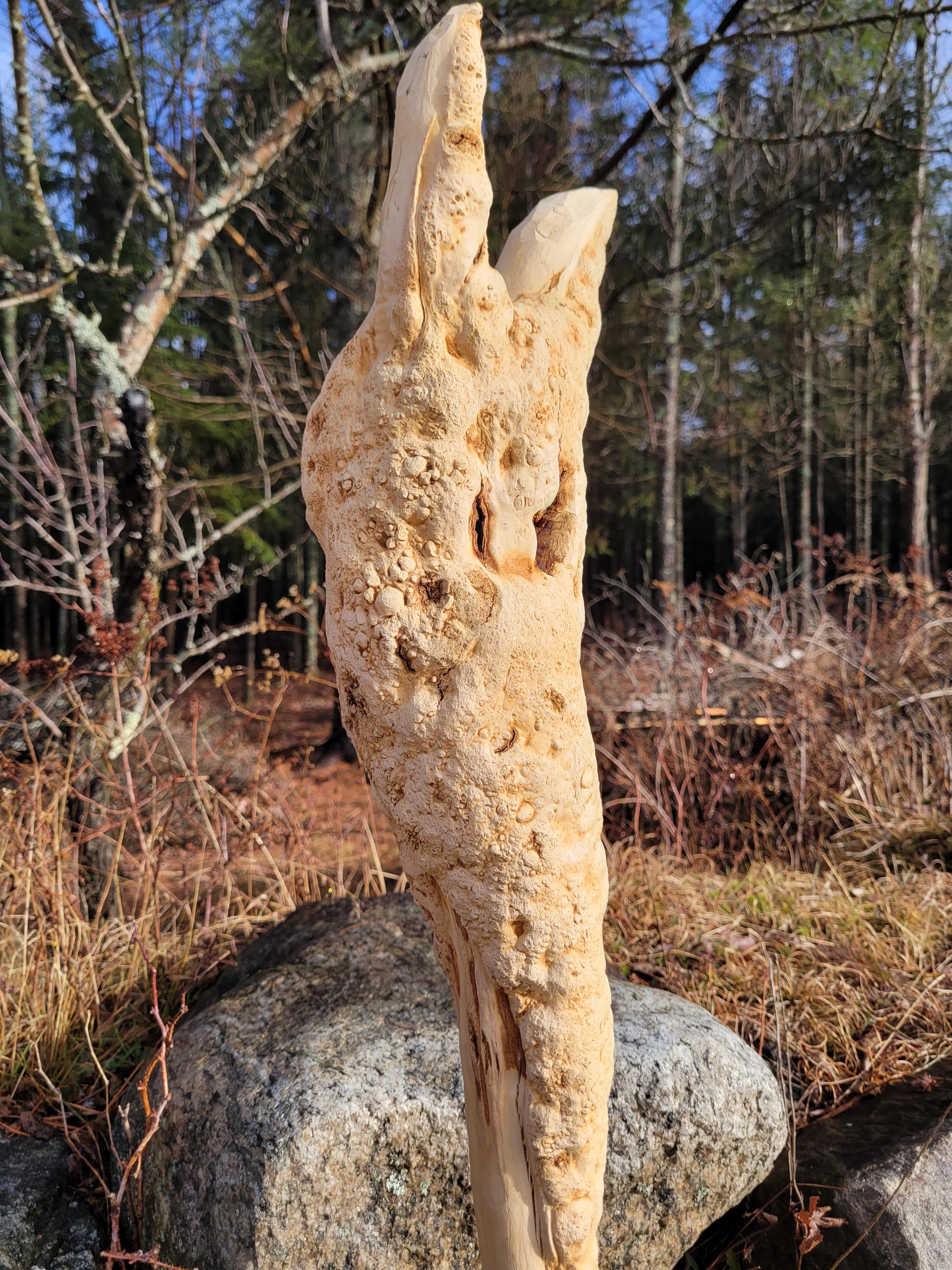
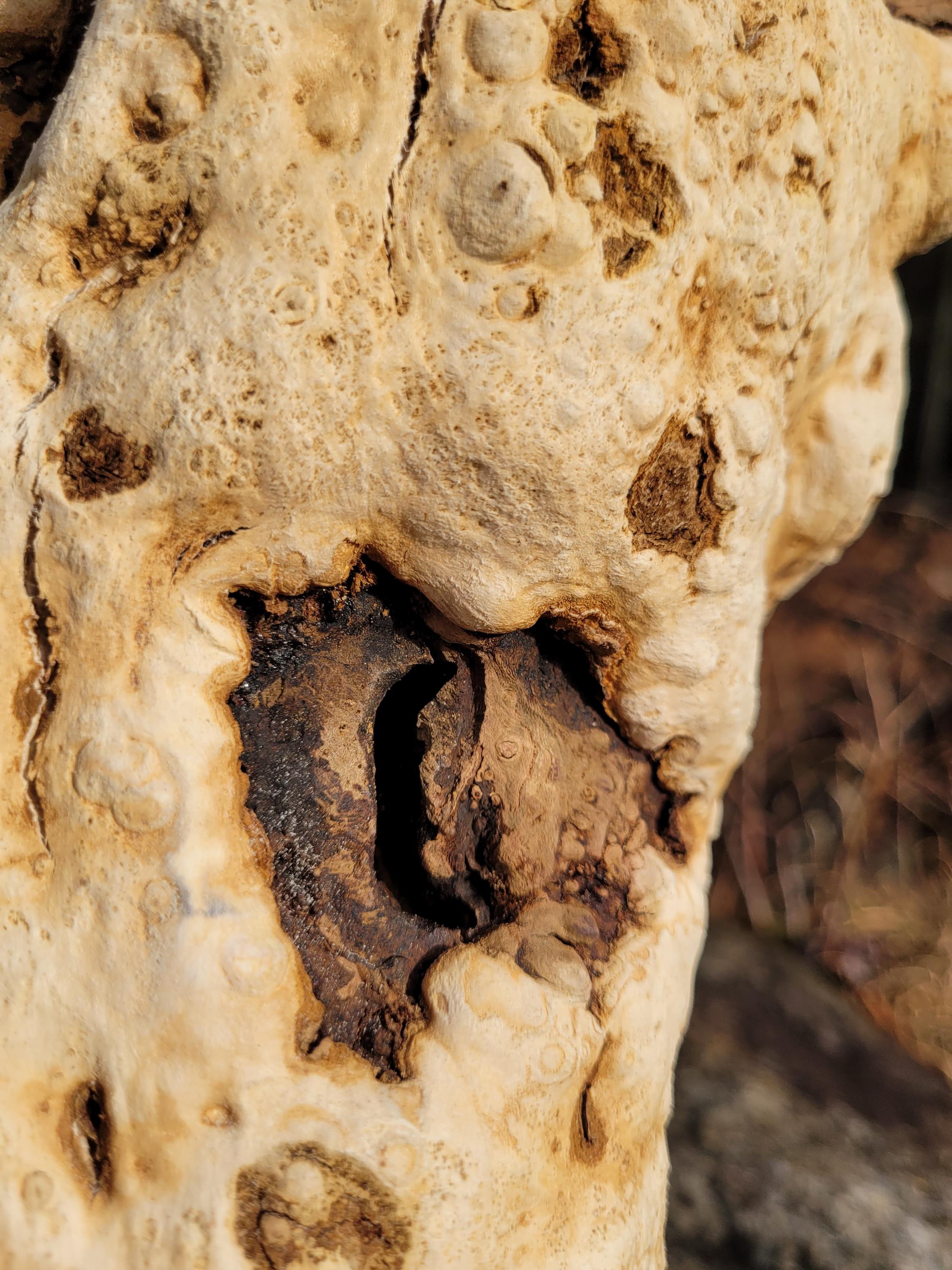
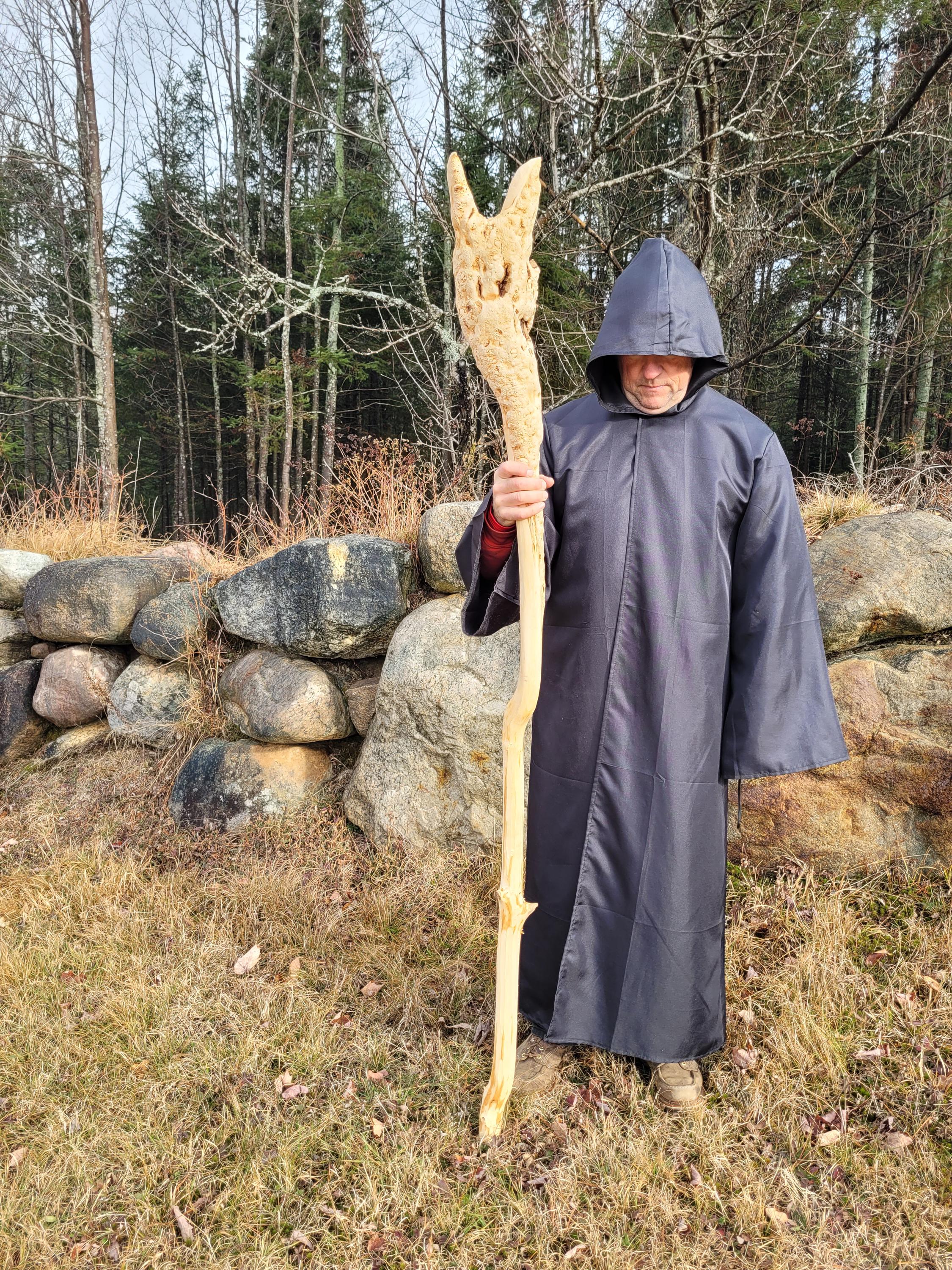
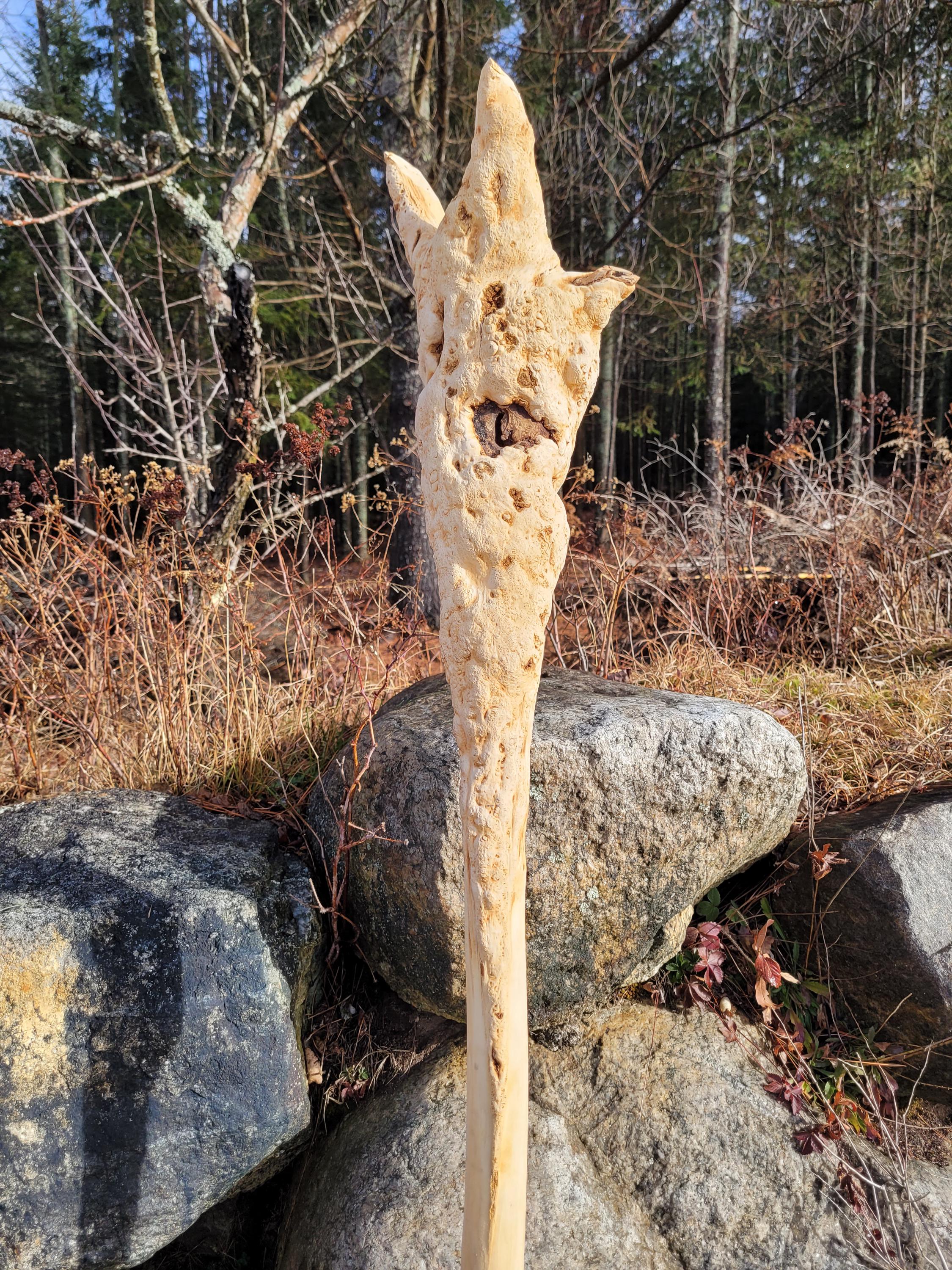
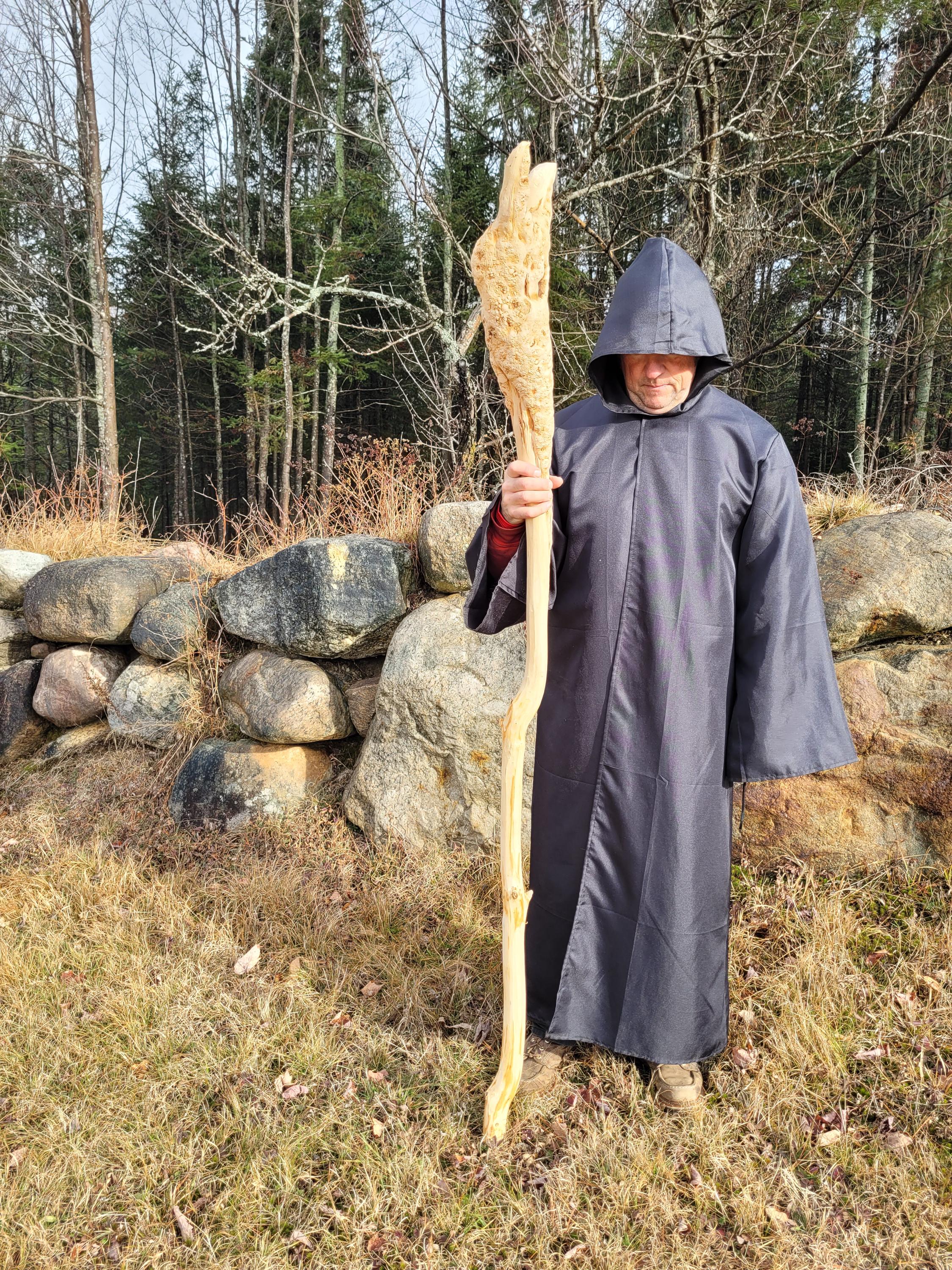
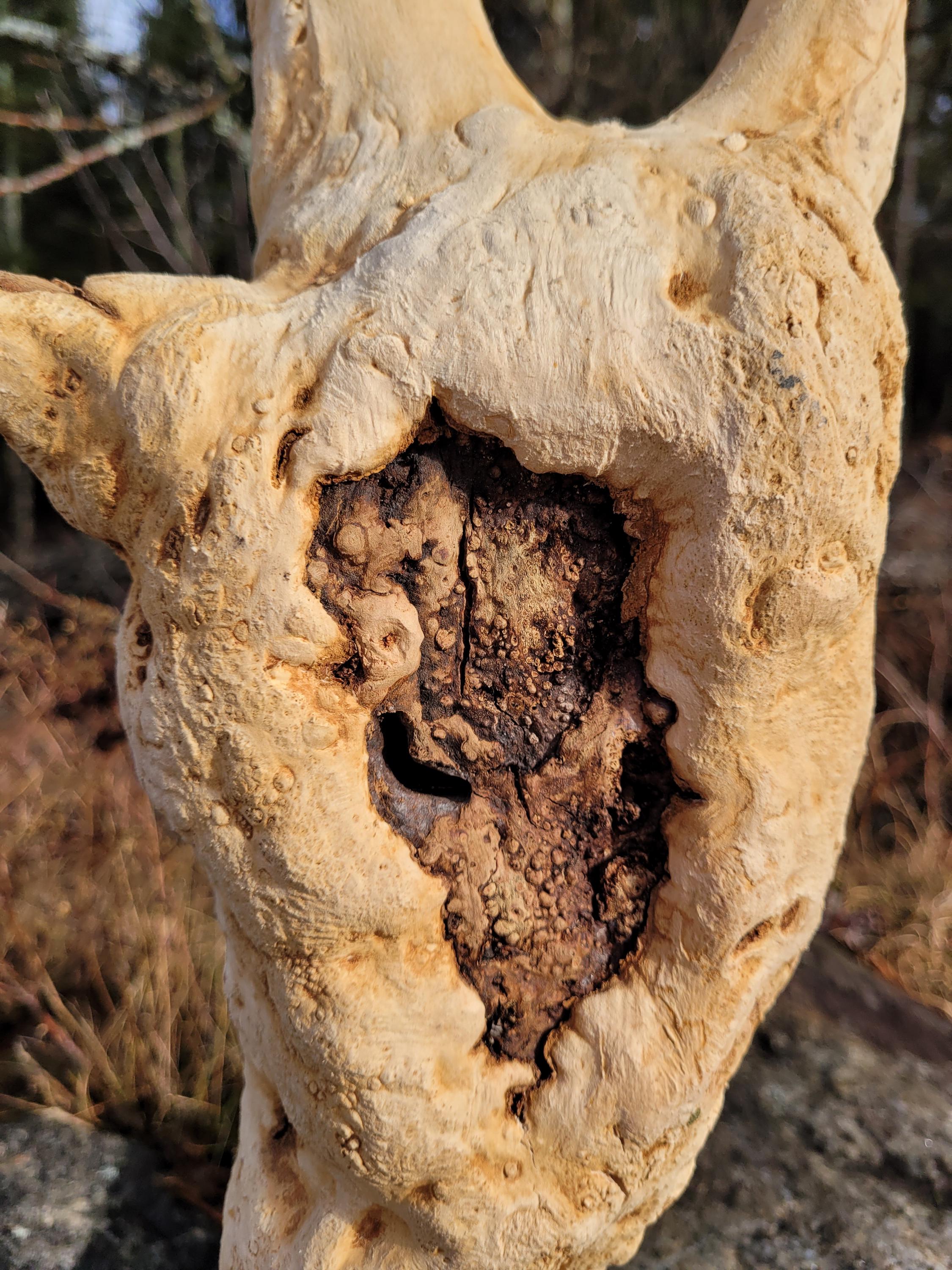
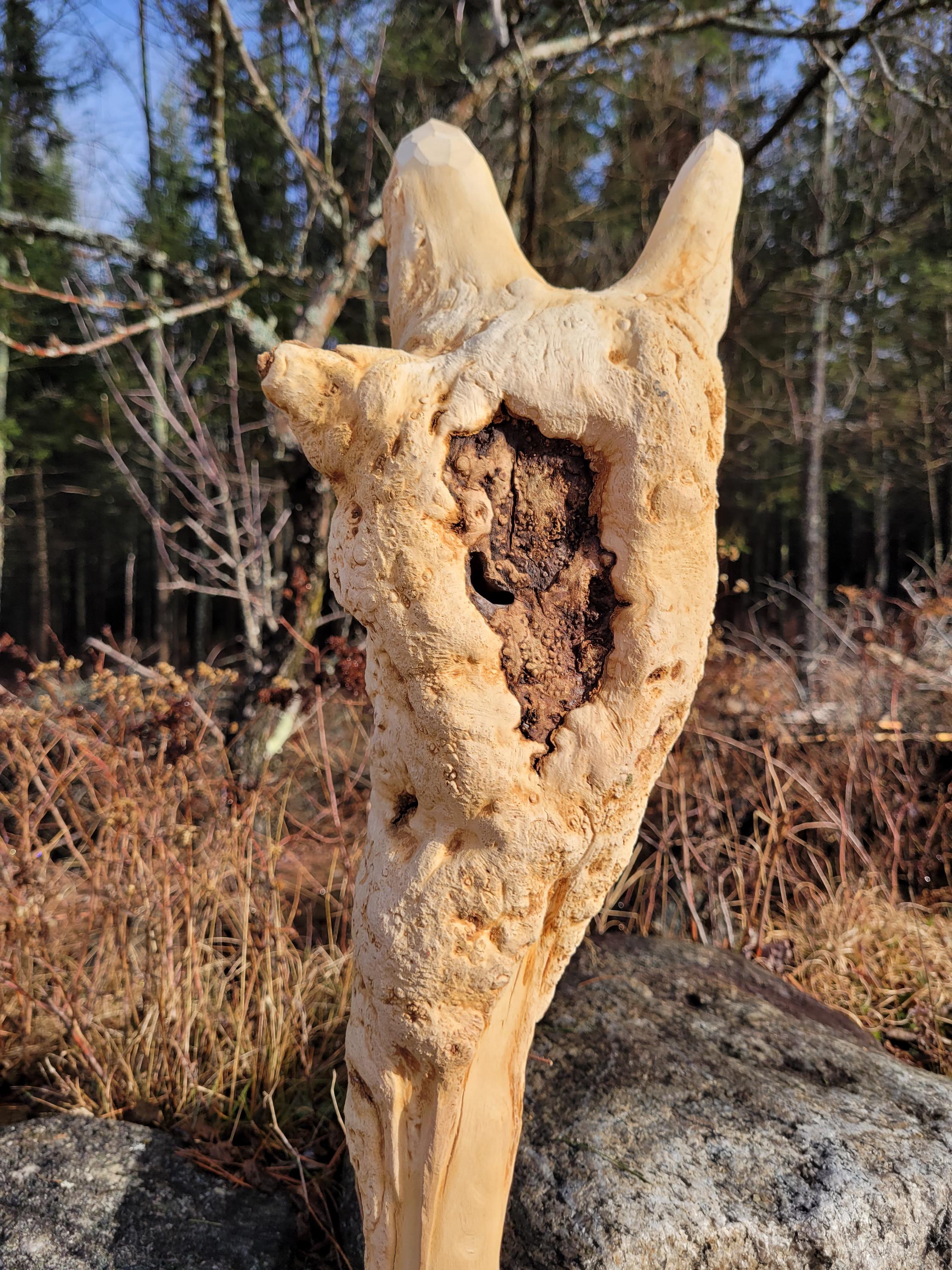
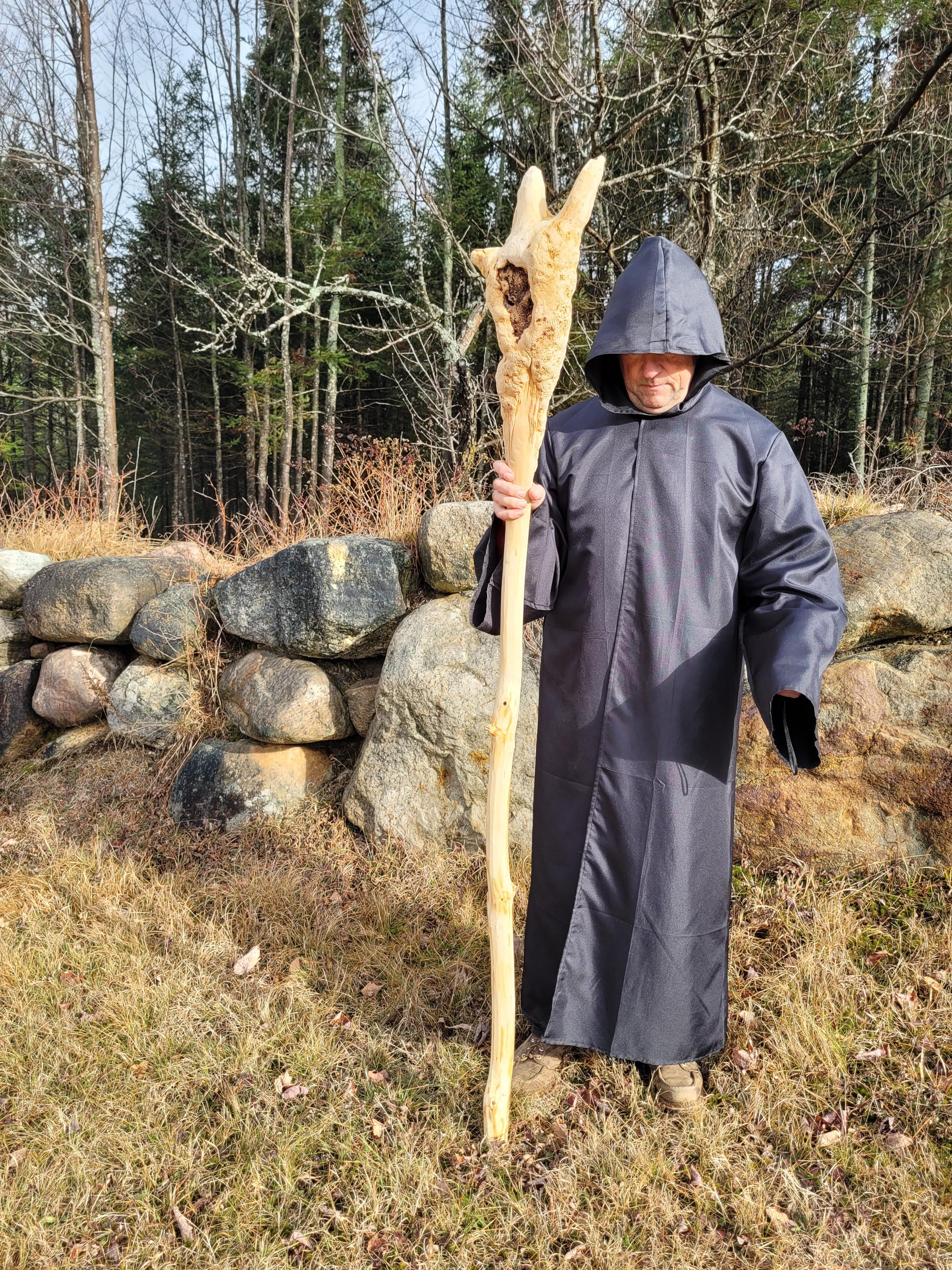
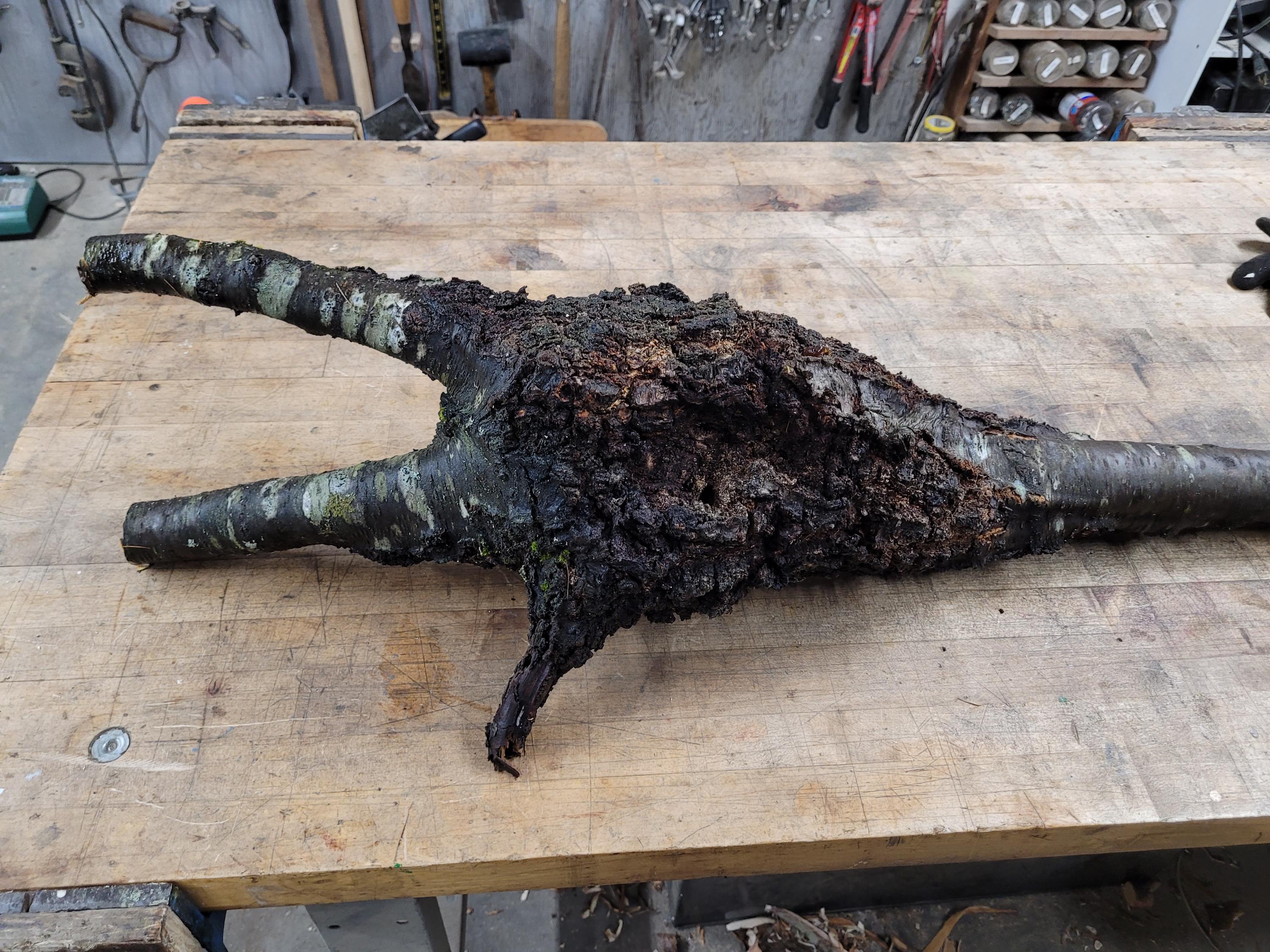
I typically dig up most of my wizard staffs as root staffs...but this burl staff came from the crotch of a Black Cherry sapling. I don't find such large burls on an ideally-sized shafts, so this is rare. It is not for the faint-of-heart, it is top heavy and weighs 9#12ozs. It stands 3/4" shy of six feet, and the shaft is mostly about 1-3/4" in diameter for the full length. It has random splits and checks from drying fast like Cherry often gets once you remove the bark. The last pic is what it looked like with the bark on. I obviously had to strip the bark to initiate the drying process and make sure there is no vermin. This one has been heat-dried and subsequently air dried. As you can see from the pics it has a dead center with some tunnels, and that is what started the whole process. What typically happens is a tree might suffer a little wound, maybe just from wind or a snow load, and it might seep a little sap. This in turn might attract an insect like a longhorned beetle, a peach tree borer (from a clear-winged moth) or an apple tree borer moth. The eggs get laid, the larvae chew into the tree and develops into adults and leave. During the process the tree will go through gummosis, where it bleeds thick sap that covers the wound to protect it, and oftentimes it smothers new invaders. The burl wood is caused by a fungal or bacterial infection that enters through the wound, and the growth is erratic and beautiful. The tunnels in this one are rather large and they go all the way through as well as exiting the small rotten stub branch off on the side. This is a raw material, what you do with it is your choice. It could be an ideal carving base for your vision or you might just want to leave it as an oddity. If you "carve" it, you'll need to use a rotary tool with carbide burrs...this if far too hard for a knife and the grain direction is far too sporadic. It is really cool how the burl wood tapers down to a point about 32" down from the top. This will ship in a 72"x8"x8" box and the body of the burl is a rough 5" to 6" in diameter.(ufws402)